Your Child Was Just Diagnosed with a Food Allergy… Now What?
Hearing the words “your child has a food allergy” can feel overwhelming.
Many parents leave the appointment with more questions than answers and immediately start searching online for what to do next.
If that’s you, take a deep breath.
Feeling anxious, confused, or even scared is completely normal. A food allergy diagnosis doesn’t just change what your child eats, it can affect school, social events, travel, and daily routines. It is okay to feel completely overwhelmed as your life seems to be turned upside down.
But here’s the good news: Research shows that when parents feel confident managing their child’s food allergy, children experience a better overall quality of life.
If your child was just diagnosed, here are some of the first steps many parents take.
1. First, Know That Your Feelings Are Valid
Many parents experience anxiety after their child is diagnosed with a food allergy. You may worry about accidental exposure, sending your child to school, or trusting others with their care.
Research shows that parents of children with food allergies often experience increased stress and anxiety, especially in the early months after diagnosis.
This reaction is understandable.
Over time, as you gain knowledge and build routines to keep your child safe, most parents begin to feel more confident managing their child’s allergy.
You are not alone in this journey.
2. Start Learning How to Read Food Labels
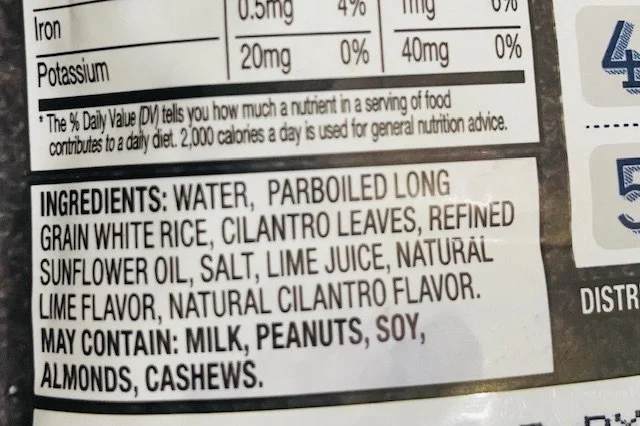
One of the most important skills for food allergy families is learning how to read ingredient labels carefully.
Food allergens can appear in unexpected places, and ingredients may be listed under names you don’t recognize.
In the United States, food manufacturers are required to clearly identify the top 9 major food allergens, which include:
Milk
Eggs
Wheat
Soy
Peanuts
Tree nuts
Fish
Shellfish
Sesame
However, there are still important details parents should understand when evaluating labels and avoiding cross-contact.
👉 Read this guide: How to Read Food Labels with Food Allergies
3. Make Sure You Understand Emergency Treatment
Most children diagnosed with a food allergy are prescribed an epinephrine auto-injector such as:
EpiPen
Auvi‑Q
Adrenaclick
These medications treat anaphylaxis, a severe allergic reaction.
Parents should understand:
When to use epinephrine
How to administer it
When to call emergency services
Many families find it helpful to practice with a trainer device and regularly review their child’s Food Allergy Action Plan. I provide education for parents, students, educators, and family members on recognizing and responding to allergic reactions, and I’m always happy to connect if you’re looking for guidance or support.
4. Know That Treatment Options Are Evolving
For many years, the only treatment for food allergies was strict avoidance.
Today, there are new and emerging treatment options that some families may discuss with their allergist, including:
Oral Immunotherapy (OIT)
Epicutaneous Immunotherapy (skin patch therapy under study)
Omalizumab (a medication recently approved to reduce allergic reactions from accidental exposures)
Not every child is a candidate for these treatments, and decisions should always be made with your child’s allergist. Read more about our experience with OIT here.
5. Telling Family, Friends, and Caregivers
Another common question parents ask is:
“How do I explain this to other people?”
Many people simply don’t understand how serious food allergies can be.
It may help to clearly communicate:
What foods your child must avoid
How to prevent cross-contact
What symptoms to watch for
What to do in an emergency
You may need to repeat this information several times with different caregivers, teachers, and family members. This is a normal part of becoming a food allergy parent. To make this easier, I offer caregiver guides that parents can share with grandparents, babysitters, teachers, and other caregivers so everyone feels prepared. Contact me to learn more.
You Don’t Have to Figure This Out Alone
The early days after a food allergy diagnosis can feel overwhelming. Many parents are trying to piece together information from social media, forums, and online searches. Unfortunately, there is a lot of misinformation on the internet and this can increase fear and anxiety.
But having clear, step-by-step evidence-based guidance can make a huge difference.
That’s why I created The Food Allergy Professor Parent Survival Course—to walk families through exactly how to navigate the early stages after diagnosis with confidence.
This course covers:
✔ Understanding your child’s diagnosis
✔ Allergy-proofing your home and daily life
✔ Emergency preparedness and epinephrine education
✔ Working with schools and caregivers
✔ Building confidence as a food allergy parent
If you’re feeling unsure about what to do next, this course will guide you through the process step by step.
👉 Learn more about the course here

Final Encouragement
Right now, this diagnosis may feel scary. That’s normal.
But over time, as you gain knowledge and build routines, food allergies become something your family manages, not something that controls your life. My son is not defined by his food allergies, but even at a young age he knows how to give himself his emergency medicine, how to advocate for himself, and how to ask safe questions about food. Those small skills build confidence, not just for him, but for our whole family.
You don’t have to navigate this alone. I know firsthand how life-changing a food allergy diagnosis can be. That’s exactly why I created the Food Allergy Parent Survival Course,to guide parents step-by-step from fear and uncertainty to confidence and preparation.